
One Small Failure Can Break an Entire Digital World
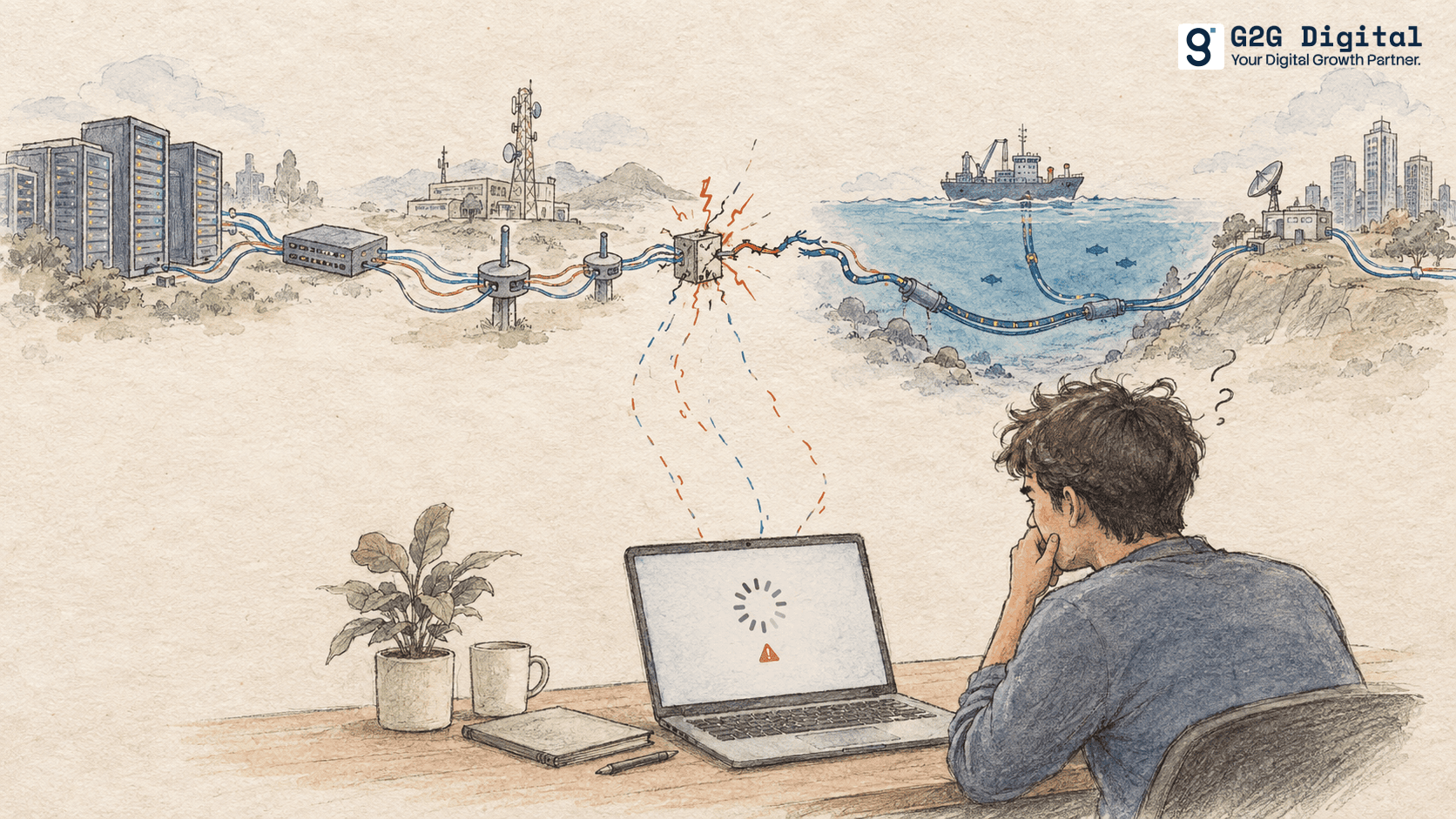
The Moment Everything Stops Working
Imagine the last time when a cloudflare outage took place. Almost 80-90% of total internet was crashed by a global outage at cloudflare. The page won’t load. Browser didn’t simply work.
Very often our video freezes mid-sentence. The app spins and then gives up. We try again. Same result. For a few seconds the whole digital world feels strangely out of order— as if someone quietly switched something off. Some one block you from the internet.
You stare at the screen longer than you need to.
Then you do what almost everyone does.
We Look for Whom Blame
We blame the Wi-Fi. We change our cellular network. Sometimes reboot the device. We try to figure out what is really happening from our consumer side. But most of the case it’s rarely your side that causing the issue.
But we blame the phone. Or the app. Or “the internet” as a single, vague thing that has decided to misbehave today. The error message is unhelpful, the loading circle is endless, and the simplest explanation feels like the only one available. A vague idea of some thing is not working.
It’s a natural reaction.
When something familiar suddenly fails, the mind reaches for the nearest, most personal cause.
The Question the Error Message Hides
The error message almost never tells the real story.
It only reports the last place the problem became visible to you. Behind that final failure, a longer sequence of events has already taken place. You are the end of a whole series of action that may have crossed multiple junctions before reaching you, and error can be happened any one of them.
The useful question is not “Why is my internet broken?”
It is closer to: Where did this actually start failing?
Most of the time we never ask it. The screen is enough to absorb our attention.
Failures Rarely Start Where We See Them
What you experience as a broken page or a dead app is usually the last link in a chain. A such chain of action that may started earlier. Which may include multiple machines, several junctions, a long network of cables.
It started somewhere earlier — sometimes far earlier — a single part of that long chain struggled. A machine overheated. A cable was damaged. A junction became overloaded. A power supply flickered. The problem then traveled forward until it finally reached you. read this
By the time the failure is visible on your screen, the original cause may already be several steps away. It could happen even before it started.

Following the Chain Downward
Imagine the path in reverse.
Your phone tried to reach a service. That request traveled along roads, passed through junctions, arrived at buildings full of machines. Any one of those steps can falter. When it does, the effect moves outward. Some requests time out. Some get redirected. Some simply vanish.
The visible symptom is local.
The actual disruption is often distributed and harder to see.
One Broken Link, Many Visible Effects
A single weak point can create many different problems at once. Just like the electric wiring of our houses, even one point failure can create electricity outage for whole house.
One overloaded junction might slow video calls in one city, make banking apps slow in another, and cause photo uploads to fail somewhere else. To the people using those services, the failures feel separate. In reality they share the same root.
This is why outages often feel strangely widespread and strangely specific at the same time.
Single Points of Failure
Some parts of the system carry more weight than others.
A major undersea cable, a large exchange point, a critical cluster of machines — if one of these is disrupted, the effects can spread quickly. The system is designed with alternatives, yet certain routes and locations still matter more than the rest.
When one of those heavier links has trouble, the rest of the network feels it.

Why Cascades Happen So Easily
Digital systems are tightly connected. These are some much internally dependent one with another. All are needed to be in harmony to run a whole chain of action from end to end.
That connection is what makes them fast and useful. It is also what allows a problem in one place to become a problem in many places. A delay in one step forces the next step to wait. Waiting creates new delays. New delays trigger timeouts. Timeouts cause retries. Retries add more load.
Just like the line of a super shop. How fast you will get to pay depends on the persons in the line in front of you.
What begins as a small difficulty can grow into a cascade simply because everything depends on everything else. All are inter connected.
Seeing Outages as System Events
Once you start looking for the chain, outages stop feeling like random personal bad luck.
They begin to look like system events — moments when the physical and digital infrastructure that usually works so quietly reveals its interconnections. The spinning wheel on your phone is no longer just your problem. It is a signal that somewhere along a long path, something is under strain.
This does not make the outage less annoying.
It does make it more understandable.
What Changes Once You Follow the Failure
The old reaction was mostly frustration mixed with a vague sense that technology had betrayed you.
The newer reaction is quieter.
You still feel the inconvenience, but a different thought sits underneath it: This started somewhere I cannot see, and it reached me through a series of steps.
That thought does not fix the problem.
It simply removes some of the mystery. The failure becomes less like a personal curse and more like a temporary break in a large, mostly invisible system.
Failures also travel.
They begin in one place and appear in another. They spread because the system is connected. They sometimes break in middle because the connections are tight
That understanding leads to a further question:
If the system is so dependent on these connections, how is it designed to keep working when parts of it fail — and what does “keeping working” actually look like from the inside?
Expert in digital growth and web technologies.
View all articles by Joy Chandra Uday

