
The Internet Is Not in the Cloud. It’s Somewhere Very Physical.
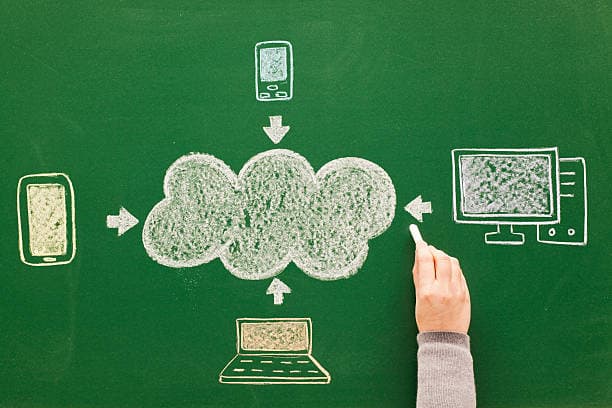
The Moment Something Goes “Into the Cloud”
Let’s think of the moment you last used GoogleDrivee. You may upload a document Oran file or just an image from your phone. This seems to be a very basic and ordinary task of our daily life.
Almost everyday we are uploading files, images, documents to internet. We are keeping backup from our local machine to a secure, remote and most importantly accessible space which we assume as cloud.
But is it?
The Picture We Carry in Head
Most of us imagine a very basic and ordinary flow when we are uploading any files into the cl.d . We imagine the image floating upward into the sky, somewhere like a cloud or a vague place like th. . We just assume it somewhere up there, exactly like cloud Forr day to day life this work perfect. You don’t need to think hard to explain yoursel It
It explains the result without asking attention. You upload the files, it goes up and live there without any concern. The photo is safe, available, and somehow elsewhere. That feels comple Yet
Yet the picture is still incomplete.
The Question the Name Itself Hides
Let me take you back to the moment the progress bar fin Theed.
The photo is no longer only on your phone. It is “in the cloud.”
A simple question sits underneath that phrase, one we almost never ask:
If it is not actually floating above us, where did it go?
We never take a moment long enough to wonder. The name feels so natural that the question itself seems unnecessary.
But the question remains, quiet and unanswered.
What the Cloud Actually Is
The cloud is not in the sky.
It is not actually even a floating layer of data above the earth.
It is a network of real buildings filled with computers — large, compact places designed to store, process, and return whatever we are sending them. Your photo did not rise from the air or cloud. It traveled to one of these buildings and was placed on physical machines that sit on concrete floors.
The flow is just like your money in the bank. You take your cash in bank and bank keep it in real places and give you just a digital currency to use. The money is in physical space in banks. And We can compare the banks as data centers.
The floating image dissolves.
What replaces it is something physical, industrial, and far more ordinary than the name suggests.

Inside the Buildings No One Talks About
Imagine walking into one of these buildings.
The space feels more like a warehouse or big computers than an office. Long rows of tall metal cabinets stretch into the distance. Each cabinet is packed with machines stacked one above another, their small lights blinking steadily.
Cables run in neat paths overhead and under the floor.
The air is cool and constant. There are almost no people. The machines work without stopping — storing photos, serving videos, keeping documents ready, answering requests from millions of phones and computers at once.
This is where your photo went.
This is what the cloud looks like when you step inside.
Why These Places Need So Much Power and Cold Air
Imagine you are watching an image at midnight or read a document just after waking up. The document or the image is always there, 24/7. Those can be accessed anywhere and anytime. Those machines never rest.
As they work, they generate heat — a steady, unavoidable warmth that builds quickly when thousands of them sit side by side.
Without constant electricity the machines stop.
Without powerful cooling the heat becomes dangerous. So the building consumes large amounts of electricity and moves cold air through the rows day and night. The quiet reliability you feel when you open a photo or start reading a documents depends on this continuous physical effort.
The digital experience stays smooth only because the physical side never stops.

Location Is Not Random
These buildings have real addresses, and stays in real places.
Companies do not place them by chance. They look for places with reliable electricity, cooler climates that make cooling easier, and strong network connections that can carry data quickly in and out.
Some sit near major cities.
Others stand in quieter regions chosen for cheaper power or lower risk of natural disruption. Geography still matters. Distance still costs time. The cloud may feel everywhere, but its buildings exist in specific places for practical reasons.
When the Physical World Interrupts the Digital One
Because the cloud lives in physical buildings, the physical world can still reach it.
A power interruption, a cooling problem, or a severe storm near a major data center can slow services or make them temporarily unavailable. A photo that usually appears instantly may take longer. A video may buffer. An app may briefly refuse to open. Or a document may keep loading to open.
Most days the systems can serve it’s users.
Yet the dependence is real: when the building has trouble, the digital services that rely on it can feel the effect.
Seeing the Ground Under Every Cloud Service
Once you see one of these buildings, others become easier to notice.
The photo you backed up.
The movie you streamed last night.
The document you opened from another device.
The files your phone saves automatically while you sleep.
Each of them lands on real machines inside real buildings.
The cloud is not one floating place. It is many grounded places, quietly supporting almost every digital habit you have.
What Changes Once You See It
Before, “in the cloud” felt weightless — something vague that simply worked.
Now the phrase carries a different weight.
When a service is slow or unavailable, you don’t think anything vague or surface rather you understand now: Something physical is struggling right now.
You do not need the details.
Simply remembering that the cloud sits on machines, uses power, and occupies real space changes the way the delay feels. It becomes less mysterious and a little more understandable.
The Next Question This Raises
The cloud is not in the sky.
It lives in physical buildings scattered across the world, filled with machines that store and serve what we need.
That clearer picture raises a natural next question:
If these buildings stand in different places, how does information actually move between them so quickly and reliably?
The answer involves another set of invisible roads — and that is where the next part of the story begins.
Expert in digital growth and web technologies.
View all articles by Joy Chandra Uday

